Choosing the Right Roof Material in Sugar Land
Picking a roof material in Sugar Land isn’t just about appearance. It’s about performance in heat, hail, wind-driven rain, and humidity—and about choosing a system that fits your building type, roof slope, maintenance expectations, and budget.
At CM Roofing Pros, we help homeowners and property managers compare roofing materials in plain language so you can make a decision you won’t regret five years later. Some materials are better for steep-slope residential roofs. Others shine on low-slope commercial buildings. Some options prioritize lifespan, while others prioritize upfront cost. The best material for your neighbor may be the wrong material for your roof geometry or exposure.
If you’re not sure where to start, begin with a roof evaluation through Residential or Commercial service pages:
Questions first? Contact us and we’ll help you narrow it down quickly.
Sugar Land Roof Material Selection Factors That Actually Matter
Before getting into individual materials, here are the variables that drive the “right” choice in Sugar Land:
- Roof slope (steep vs low-slope): Many membranes are designed for low-slope; shingles are designed for steep-slope.
- Hail and wind exposure: Impact ratings and proper perimeter securement matter.
- Heat and UV intensity: Reflectivity, coating options, and thermal movement performance are critical.
- Drainage reality: Ponding water is a killer for some systems; proper slope and drains are part of material success.
- Foot traffic and rooftop equipment: Restaurants, retail, and multi-tenant buildings need durable details around penetrations.
- Maintenance tolerance: Some systems require periodic inspection and minor touch-ups to reach full lifespan.
- Budget and lifecycle cost: The cheapest roof is often the most expensive after repeated repairs.
If storm damage is the reason you’re researching materials right now, also review Weather Damaged Roof Repair so you understand what often fails first and why.
Asphalt Shingles
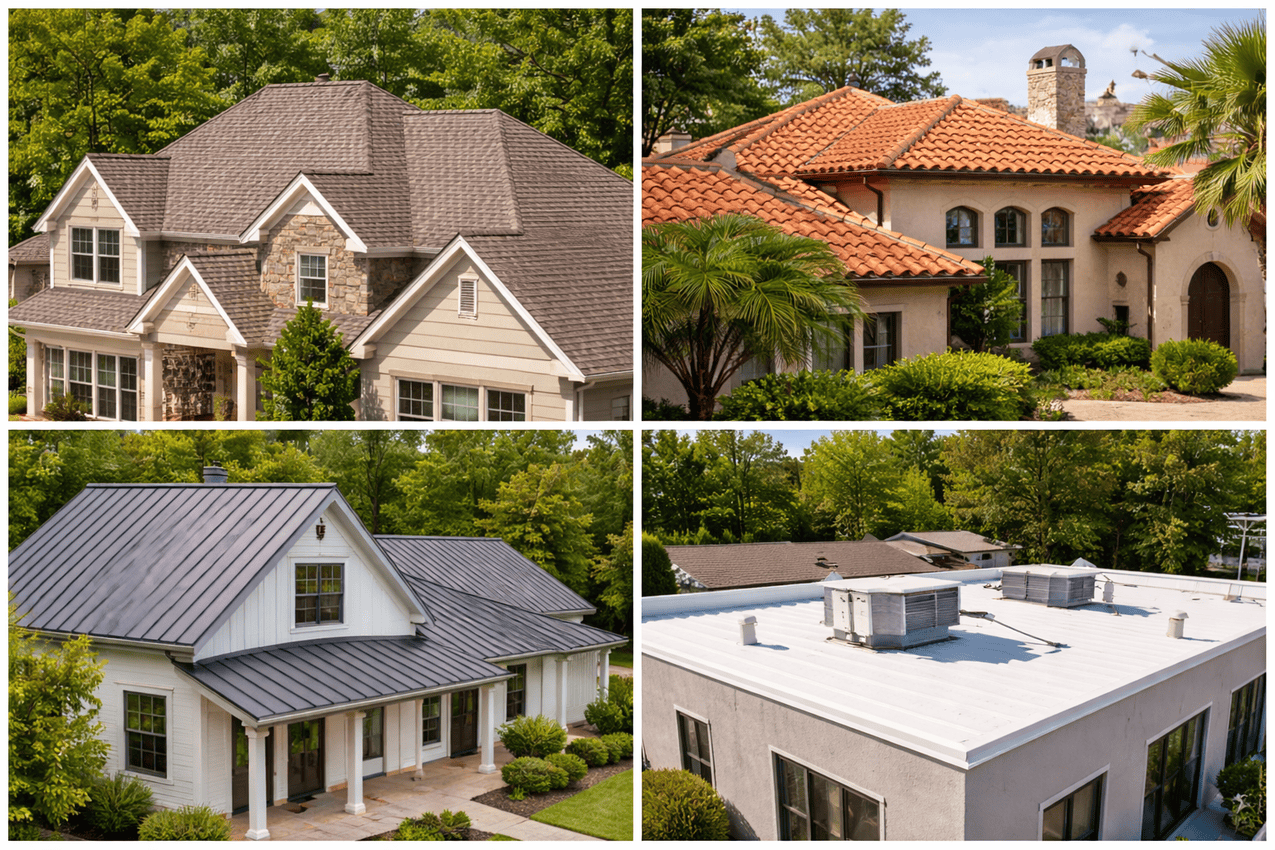
Asphalt shingles are the most common residential roof material across Sugar Land for a reason: they’re cost-effective, widely available, and work well on typical steep-slope homes when installed correctly.
Best for:
- Most residential homes
- Buyers prioritizing cost/value balance
- Standard roof slopes with good ventilation
Key performance notes in Sugar Land:
- Heat and UV accelerate aging—ventilation and underlayment quality matter a lotWind resistance is heavily influenced by installation details (starter strips, sealing, ridge work)
- After hail events, shingles may bruise or lose granules even without immediate leaks
If you’re considering a shingle replacement, see Roof Installation / Replacement.
Composite Shingles
Composite shingles (synthetic options) aim to deliver enhanced durability and aesthetics with lighter weight than some premium natural materials. They can be a strong fit for homeowners who want an upgraded look without going all-in on slate or tile.
Best for:
- Homeowners wanting premium appearance and longer-life potential
- Homes where weight is a consideration vs heavy tile/slate
Key performance notes:
- Product quality varies—selection matters
- Proper flashing integration is still the difference between “premium roof” and “premium leak”
Clay / Concrete / Spanish Tile Roofing
Tile roofing can be visually striking and long-lasting, but it’s not “install and forget.” It requires skilled handling, correct underlayment strategy, and careful flashing details—especially around penetrations and transitions.
Best for:
- Higher-end residential architecture
- Owners prioritizing longevity and aesthetics
Key performance notes in Sugar Land:
- Tile is durable, but underlayment and flashing are where failures happen
- Weight and structural suitability should be evaluated
- Repairs require a contractor who won’t crack tiles during access
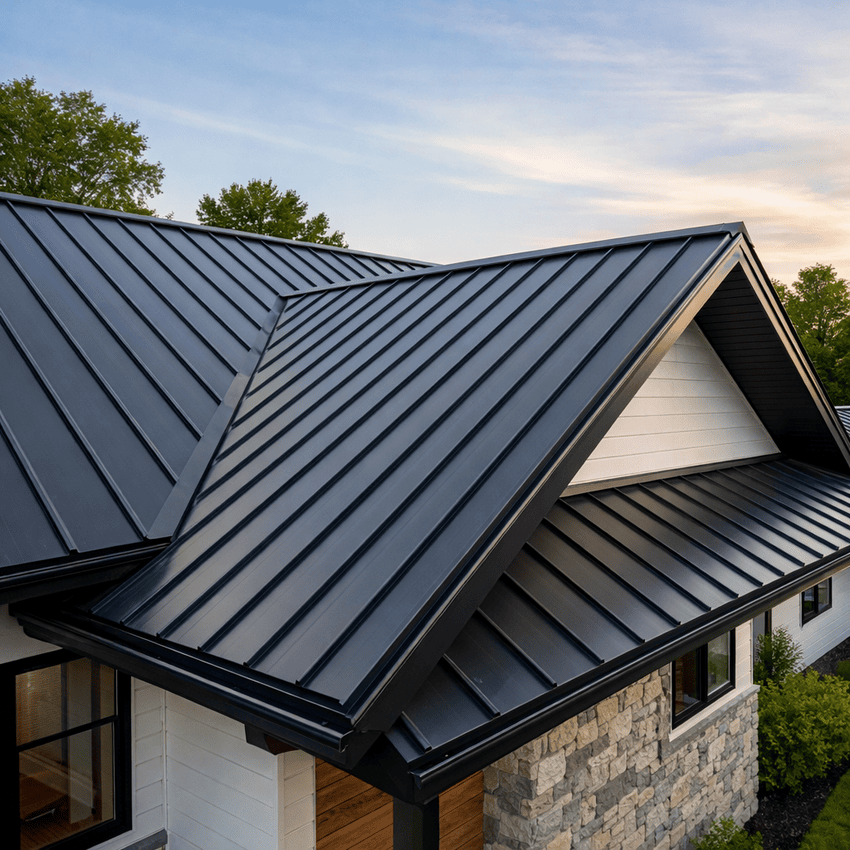
Metal Roofing
Metal roofing is popular for its longevity, wind performance, and modern look. It can also be a strong solution for certain restoration paths and energy goals.
Best for:
- Residential owners wanting long-term durability
- Buildings where wind performance and lifespan are top priorities
Key performance notes:
- Fastener strategy, panel selection, and flashing details matter more than people realize
- Thermal movement must be accounted for—bad details = recurring issues
- Metal can be a great candidate for restoration/coating in the right scenarios
If you’re exploring restoration, see Roof Restoration / Coating.
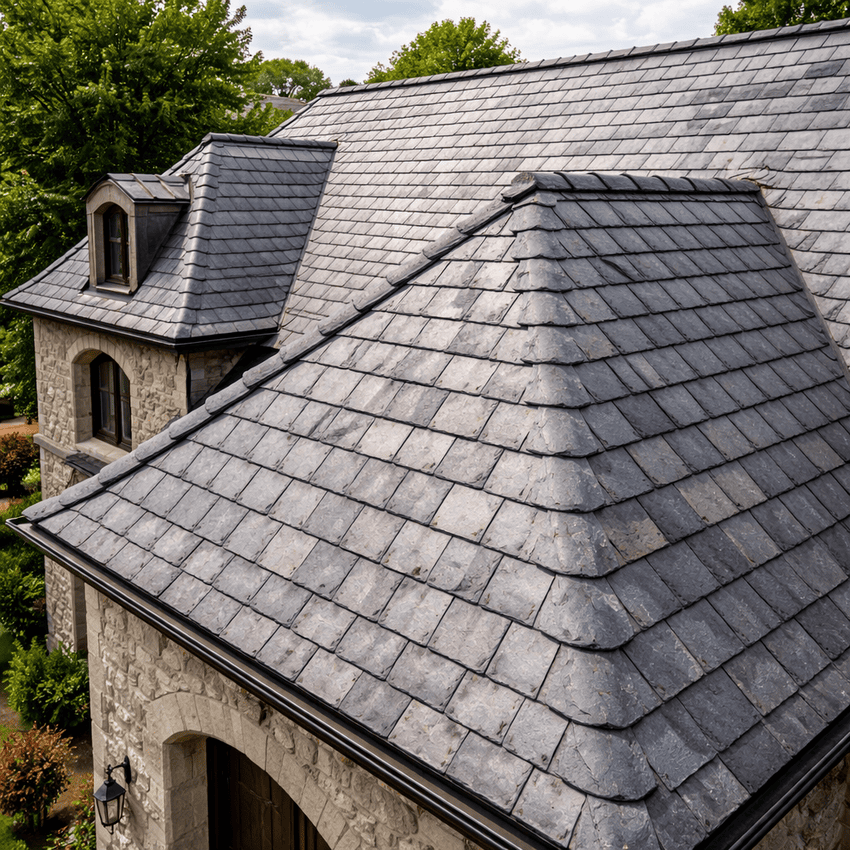
Slate Roofing
Slate is a premium material with a long lifespan, but it’s a specialized system. It’s not a “standard roofing crew” install.
Best for:
- High-end homes where aesthetics and longevity justify the cost
- Owners comfortable with specialty maintenance and repair requirements
Key performance notes:
- Correct installation and repair expertise are essential
- Weight and structure must be appropriate
- Flashing and penetrations still require careful planning
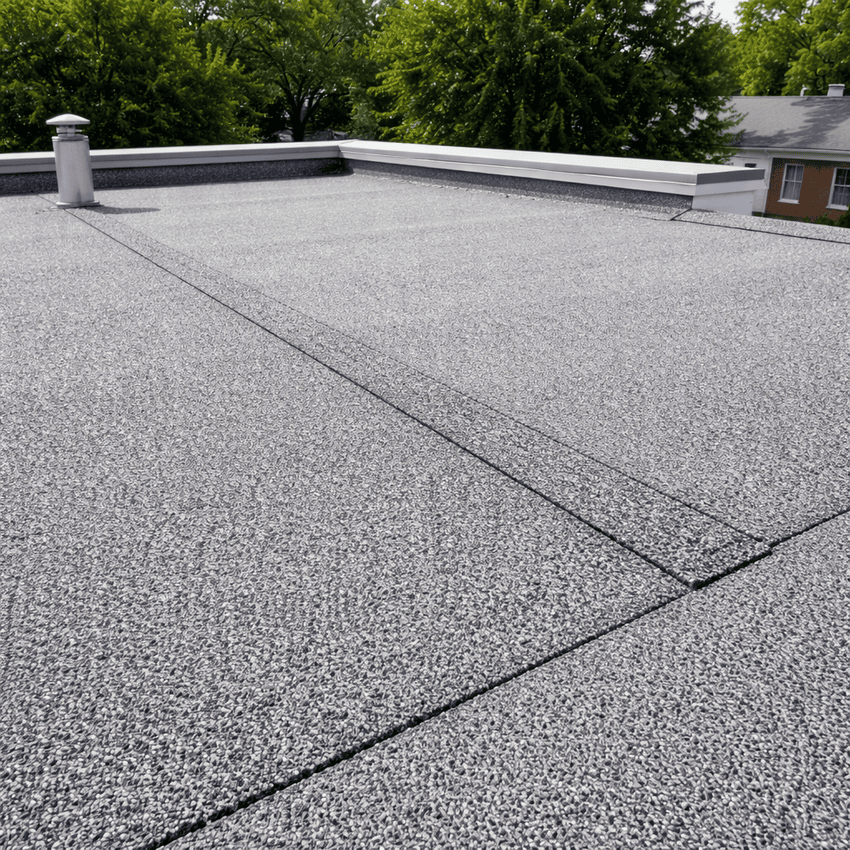
Modified Bitumen
Modified bitumen is a common low-slope solution, used frequently on commercial buildings and some residential low-slope sections.
Best for:
- Low-slope commercial roofs
- Buildings needing durable, repairable systems
Key performance notes in Sugar Land:
- Seams and penetrations are the most common leak points
- Maintenance inspections pay off because small issues are easy to correct early
For low-slope systems and planning, see Commercial Roof Repair.
PVC Roofing
PVC is a low-slope single-ply membrane known for durability and seam performance when properly installed.
Best for:
- Commercial roofs with low slope
- Buildings with certain rooftop conditions where chemical resistance can matter
Key performance notes:
- Installation quality is everything—seams, terminations, flashing details
- Drainage planning reduces long-term risk
TPO Roofing
TPO is widely used in commercial low-slope roofing and is often selected for reflectivity and cost-value balance.
Best for:
- Many commercial roofs in Sugar Land
- Owners wanting reflective performance and modern membrane systems
Key performance notes:
- Correct seam welding, perimeter securement, and detail work is what determines success
- Maintenance and periodic inspections extend life significantly
If you’re evaluating commercial replacement options, see Commercial Roof Installation & Replacement.
“What’s the Best Roof Material in Sugar Land?”
The honest answer is: it depends on your roof type.
- Most steep-slope residential roofs do well with quality shingles, composite options, tile, or metal—when ventilation and flashing are done right.
- Most low-slope commercial roofs do well with TPO, PVC, modified bitumen, and restoration/coating paths—when drainage and seams are handled correctly.
If you want a practical recommendation based on your building and budget, start with a free roof estimate.
Why Choose CM Roofing Pros
- Free Quotes & Second Opinions — Material choices aren’t one-size-fits-all; we’ll explain what fits your roof slope, exposure, and budget without pushing a default option.
- Transparent, Competitive Pricing — You’ll receive a clear scope that ties the material choice to real installation details (underlayment, ventilation, flashing), not vague “upgrade” language.
- Insurance Guidance — If you’re choosing materials after storm damage, we help keep documentation and scope aligned so your roofing plan stays organized.
- Clean, Safe Job Sites — Material installs (especially tile and metal) require careful handling; we protect exterior surfaces and keep the site controlled and clean.
- Local, Code-Compliant Expertise — We recommend materials that make sense in Sugar Land conditions—heat load, hail risk, and heavy rain patterns.
- Trained Crews & Quality Control — The best material fails if details are wrong; we emphasize penetrations, edges, valleys, and transitions where roofs usually lose.
- Premium Materials, Real Options — We’ll compare realistic options (good/better/best) so you can choose based on lifecycle and goals—not just price.
- Roof Restoration Specialists — If your roof is a candidate, restoration can be a smart “extend life” move while you plan for long-term replacement.
- Workmanship Warranty — Written coverage that supports confidence in the system you choose and the way it was installed.
Areas We Serve Near Sugar Land
CM Roofing Pros serves Sugar Land and surrounding communities across West Houston and Fort Bend County, including:
- Sugar Land
- Missouri City
- Rosenberg
- Stafford
- Pearland
- Cypress
- Katy
- Houston
- Fort Bend County
FAQs: Sugar Land Roof Material Types
Longevity depends on roof type and installation. Metal, tile, slate, and well-installed commercial membranes can last a long time, but only if drainage and details are correct.
Often, yes—especially for long-term owners. It can perform well against wind and heat, but the flashing and thermal movement details must be done correctly.
Yes. They’re the most common residential option and can perform well when paired with proper ventilation, underlayment, and correct installation details.
Both can be strong systems. The “better” choice depends on building use, rooftop conditions, budget, and the installer’s ability to execute seams and details properly.
Sometimes. It depends on your roof structure, slope, and design constraints. We can evaluate feasibility during an inspection.
It can. Reflective materials and coatings can reduce heat absorption, which may help attic conditions and HVAC workload—especially on low-slope roofs.
It depends on your roof design and budget. Some materials resist impact better than others, but installation quality and system design still matter most.
Yes. Request a free roof estimate and we’ll recommend options that match your roof type, exposure, and goals.