

Sugar Land Roof Damage Repair
If your roof is leaking, missing shingles, or showing obvious storm wear, the goal isn’t to “patch and hope.” The goal is to stop water intrusion, correct the failure point, and keep the fix from turning into a repeat call six months later. In Sugar Land, roof damage often starts small—lifted shingles, a compromised pipe boot, a flashing gap—then shows up later as ceiling stains, wet insulation, or soft decking.
CM Roofing Pros provides roof damage repair for homeowners and property managers who want a clear diagnosis and a durable fix. We don’t treat every issue like an automatic replacement, and we don’t treat every repair like a temporary band-aid. We document what’s happening, explain your options in plain language, and recommend the most practical path forward.
If you want to schedule right away, request a free roof estimate. If you need to talk through symptoms first, contact us or call us.
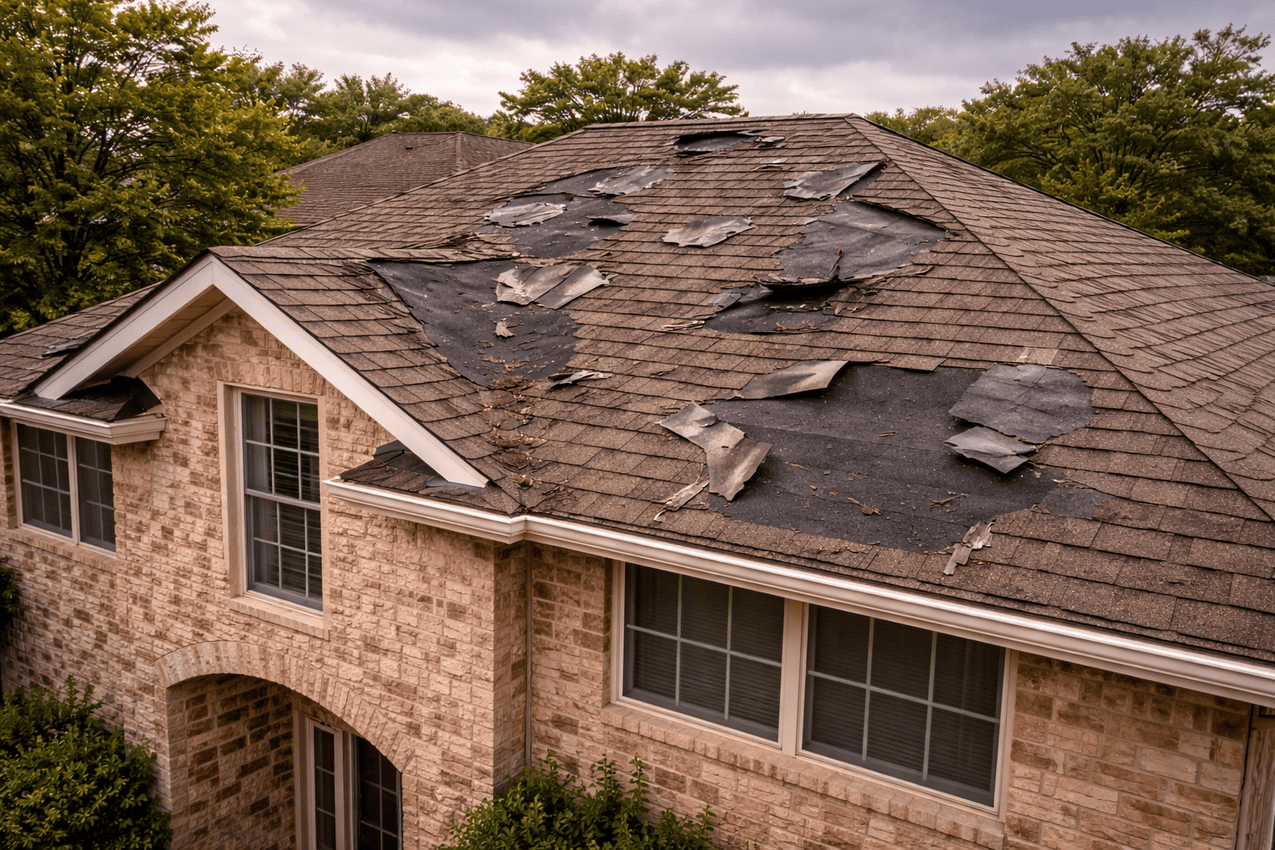
Roof Damage Repair in Sugar Land
Roof damage looks different depending on the roof type, slope, age, and what caused the issue. But most repairs fall into a few high-probability categories:
- Wind-lift and displaced shingles (often after storms—sometimes without immediate leaks)
- Hail impact (bruising, granule loss, weakened shingles)
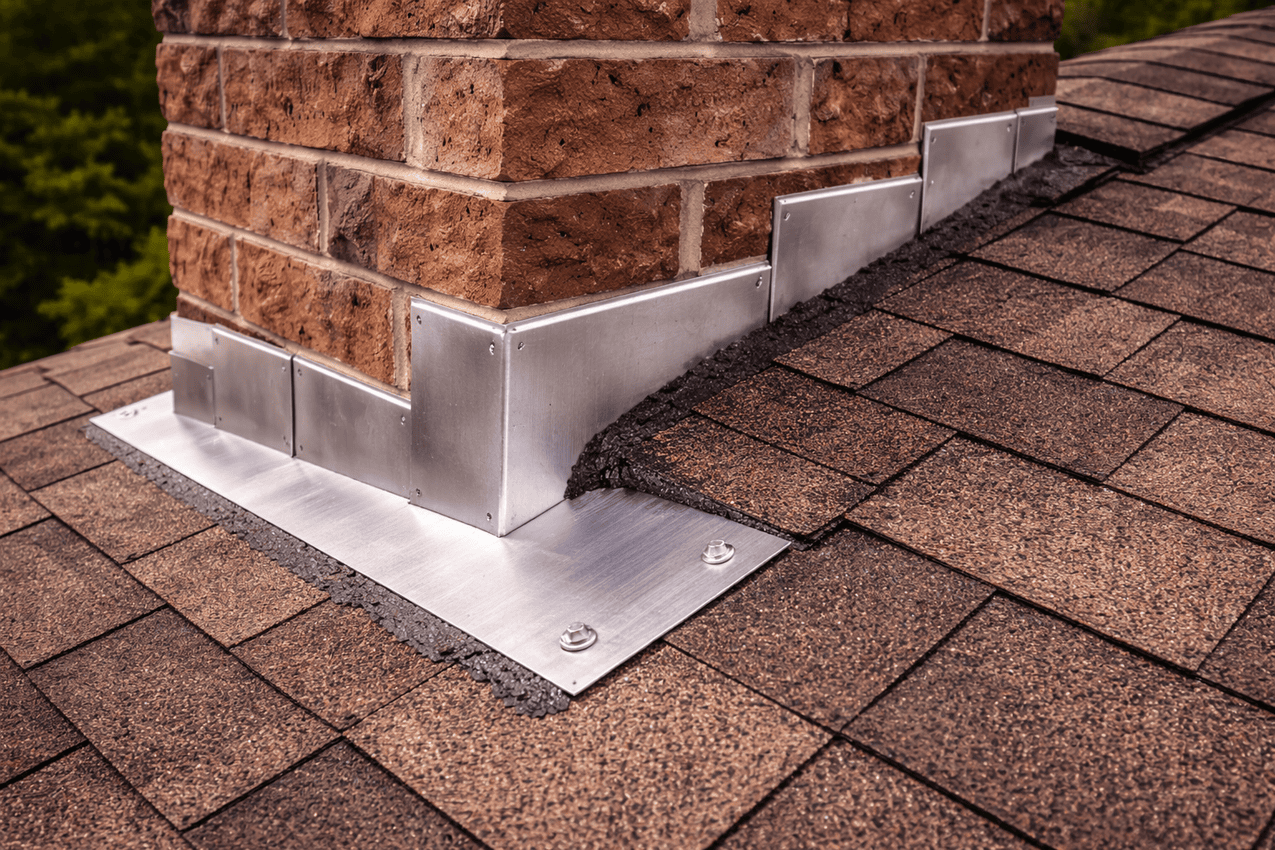
- Flashing failures (roof-to-wall intersections, chimneys, valleys, skylight curbs)
- Penetration leaks (pipe boots, vents, attic fan penetrations)
- Edge and ridge failures (caps, starter strips, perimeter details)
- Debris/tree-related damage (punctures, broken components, impact cracks)
- Low-slope drainage issues (ponding indicators, seam/termination issues where applicable)
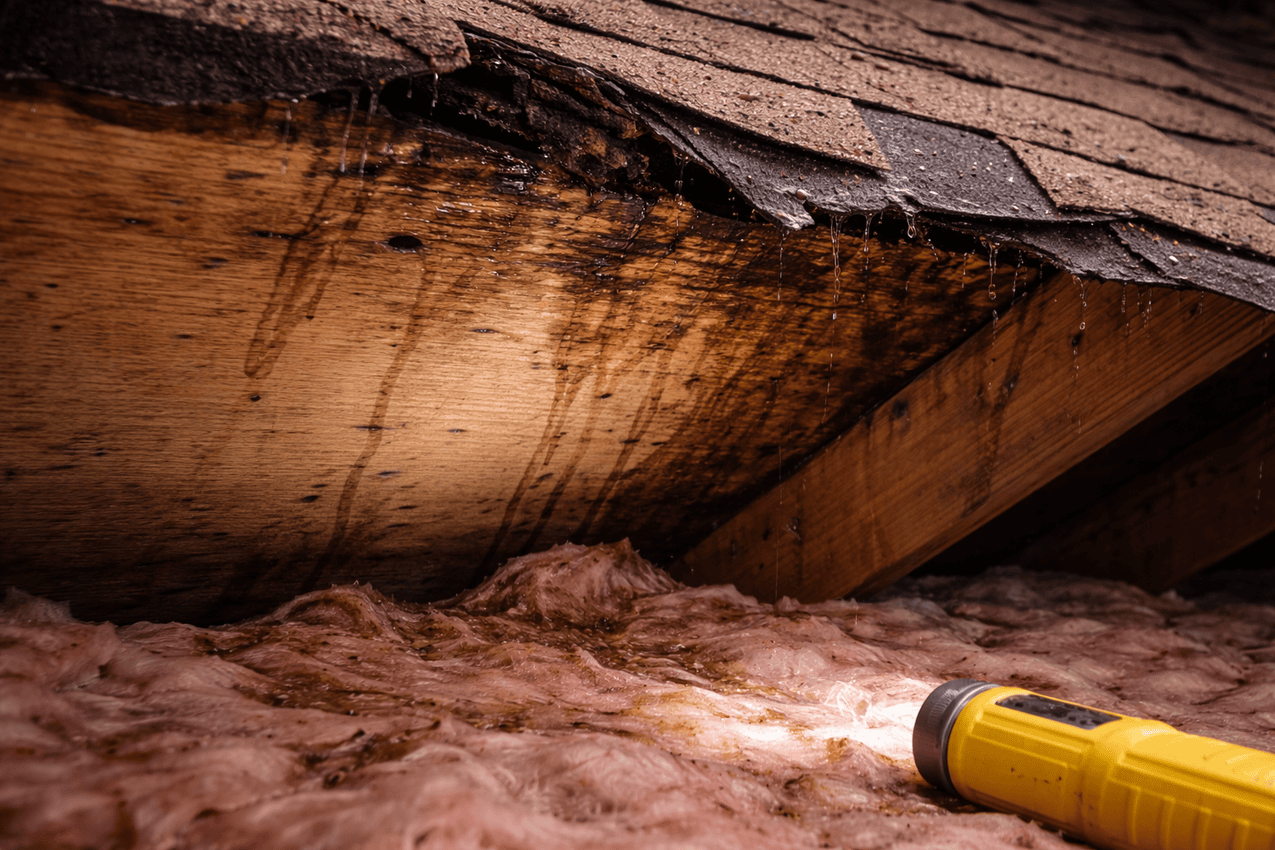
A good repair starts by identifying the true entry point—not just the interior stain location. Water often travels along decking or framing before it appears inside.
Common Warning Signs Your Roof Needs Repair
Some damage is obvious. Some is subtle until it becomes expensive. If you see any of the following, a repair assessment is worth doing now (not later):
- Interior ceiling stains, bubbling paint, or damp drywall
- Dripping during heavy rain or wind-driven storms
- Missing, curled, cracked, or sliding shingles
- Granules collecting in gutters or at downspout exits
- Soft spots on the roof or sagging areas (structural concerns)
- Rusted flashing, open seams, or exposed fasteners on metal components
- Moldy attic smells, wet insulation, or visible roof deck staining
If you’re unsure whether it’s “repair” or “bigger than repair,” start with a roof inspection & estimate.
What Our Repair Process Looks Like
Roof repair should be methodical, not rushed. We typically follow a simple, effective sequence:
- Confirm the problem and source
- We identify the failure point and verify whether the issue is localized or system-wide.
- Stabilize the roof if active leaking is present
If immediate protection is needed, we prioritize stopping active intrusion first.
Repair with the right detail strategy
A durable repair is almost always about details: correct flashing integration, proper sealing approach, correct fastener placement, and material compatibility.
- Document and explain what was repaired
- You should know what was fixed, why it failed, and how to avoid recurrence.
If the damage is storm-driven and broad, you may also want to read:
Weather Damaged Roof Repair
Repair vs. Restoration vs. Replacement
Not every damaged roof needs replacement. But not every damaged roof is a good repair candidate either. Here’s the practical breakdown:
- Repair is best when damage is localized and the roof still has meaningful service life.
- Restoration/coating may be viable when the roof structure is sound and your goal is extending service life (common on certain systems and conditions).
See: Roof Restoration / Coating - Replacement is best when failures are widespread, repairs are stacking up, or the roof is at end-of-life.
See: Roof Installation / Replacement
If you’re navigating storm damage with insurance, this helps keep the process clean:
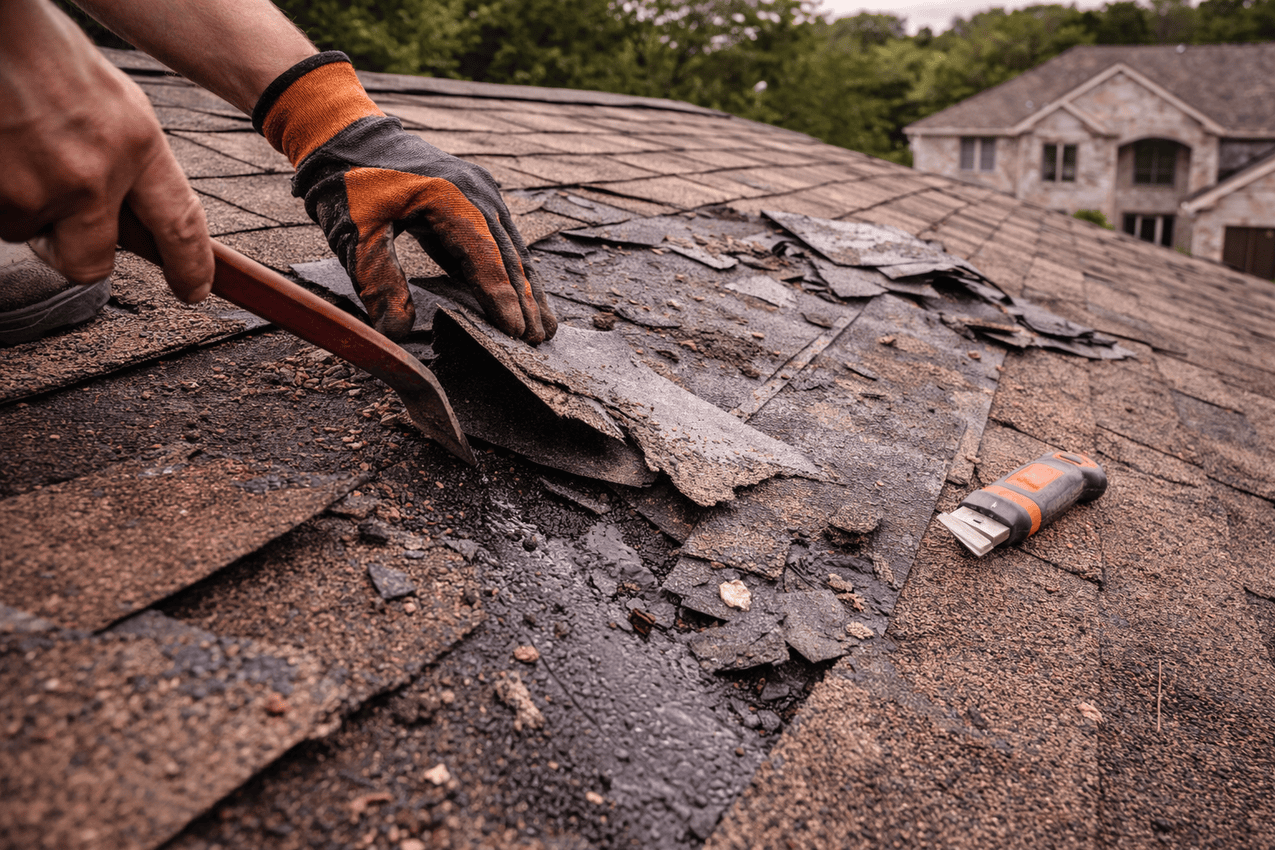
Roof Insurance Claim Assistance
Sugar Land Storm Repairs and “Hidden” Damage
A common pattern in Sugar Land: a storm passes, everything looks fine from the ground, then months later you get a leak in a place you didn’t expect. That’s often because:
- Wind compromised sealing without tearing off shingles
- Hail bruised shingles and accelerated granule loss
- Flashing edges lifted slightly and became an entry point during heavy rain
- Valleys and transitions began channeling water under weakened components
If you’re calling after a storm, early documentation and targeted repair can prevent interior damage and keep the repair scope smaller.
Why Choose CM Roofing Pros
- Free Quotes & Second Opinions — We’ll tell you whether the roof needs a repair, a restoration plan, or a replacement—based on documented conditions, not assumptions.
- Transparent, Competitive Pricing — Clear line-item scopes so you understand what’s being repaired and why it matters.
- Insurance Guidance — If damage is storm-related, we help keep documentation organized and the roofing scope clear so you can make informed decisions.
- Clean, Safe Job Sites — Landscaping protection, daily magnetic nail sweeps, and thorough cleanup—because repairs shouldn’t leave a mess.
- Local, Code-Compliant Expertise — Repairs aligned with Greater Houston building expectations and the realities of heat, hail, and heavy rain.
- Trained Crews & Quality Control — Skilled installers, supervisor check-ins, and photo documentation where helpful—especially around leak-prone details.
- Premium Materials, Real Options — Proper repair materials matched to your existing system so fixes hold up instead of failing early.
- Roof Restoration Specialists — Metal / Monolothic / Seamless Systems are Affordable Options. If restoration is a better value than repeated repairs, we’ll explain that candidly.
- Workmanship Warranty — Written workmanship coverage so you’re protected after the repair is complete.
Areas We Serve Near Sugar Land
CM Roofing Pros serves Sugar Land and surrounding communities across West Houston and Fort Bend County, including:
- Sugar Land
- Missouri City
- Rosenberg
- Stafford
- Pearland
- Cypress
- Katy
- Houston
- Fort Bend County
FAQs: Roof Damage Repair
Immediately. Even a small leak can soak insulation, stain ceilings, and create deck rot. Early repair usually costs less.
Often, yes—if damage is localized and the roof still has meaningful service life. We’ll tell you when repair is the smart option.
Common culprits include flashing failures, penetrations (pipe boots/vents), valleys, edge details, and wind-driven water during storms.
We do our best to match, but exact matches can depend on age, weathering, and product availability. We’ll explain options clearly.
It depends on the extent and pattern. Localized damage can sometimes be repaired, but widespread hail impacts often indicate a larger scope.
If active intrusion is occurring, we prioritize stopping water entry quickly. See the storm resources on our Weather Damaged Roof Repair page.
That depends on the damage scope and your policy. If insurance may be involved, review Roof Insurance Claim Assistance.
Request a free roof estimate and include a note about symptoms (leak location, missing shingles, storm date, etc.).